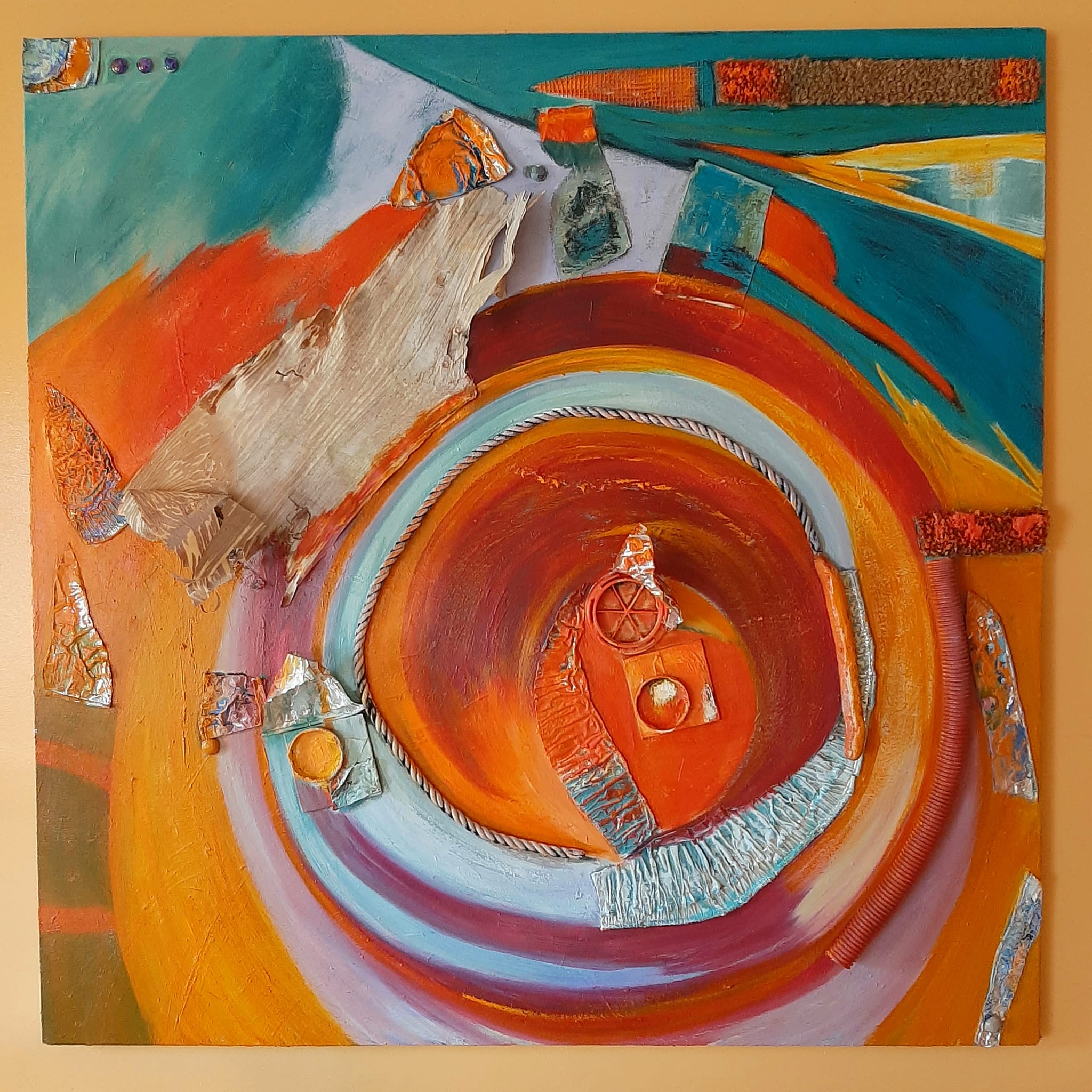
Wednesday, 12 April 2023

When a parent dies when you are singing abroad

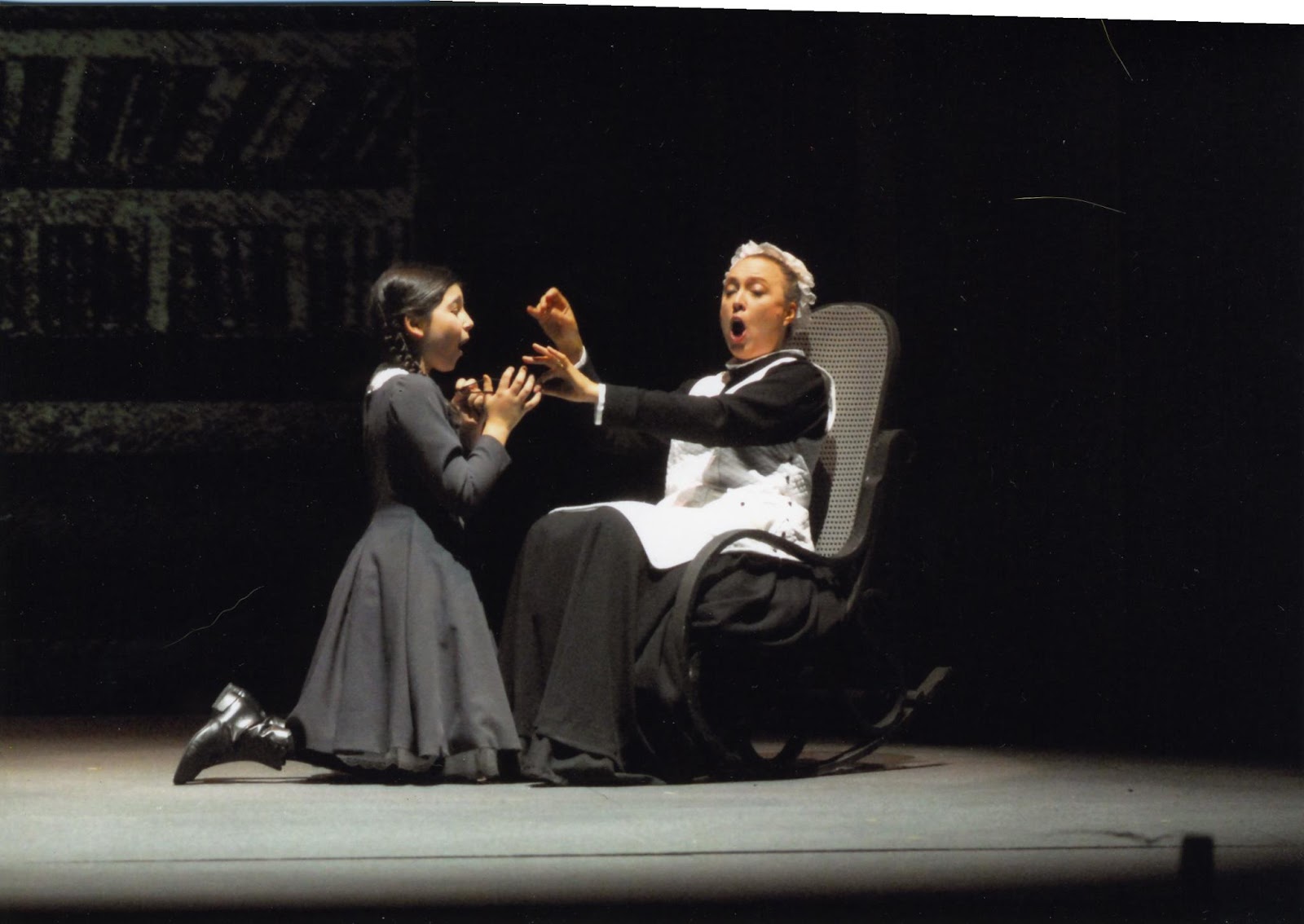
In 2004 I won a year's contract in an audition with 30 other mezzos to sing Mistress Quickly in Verdi's Falstaff and Mrs Gross in Britten's Turn of The Screw at The Landestheater in Salzburg. It was a dream come true. Better roles than I had had at The Vlaamse Opera in Antwerp and Ghent plus the thrill of living in mountains in the romantic Austrian winter with cross country ski-ing easily available. 

My mother visited in the spring. We had a wonderful time drinking Grüner Veltliner on the roof terrace of the Hotel Stein and enjoying my performances and the general camaraderie. However she was not well. I knew in my heart that on her return to the UK she wouldn't make it. The heart surgeon said that one in twenty drop dead within the first thirty days of the operation. And so it was that the day after I had walked into the Salzburg mountains and seen a luminous sunset, my mother died. Thirty days exactly since her aortic valve had been replaced. I contemplated the wild garlic growing outside my urban apartment in Rettenparkstrasse.

" Can I speak to Penny ?" "Oh, I am so sorry " the nurse said "But Penny just died". I could hear my husband wail on another extension. What a co-incidence that we had rung at the same time, me from Salzburg, he from Hampstead. It was almost worse to hear him sobbing rather than receive the news that my brave Mum was no more. What should I do? Go home immediately? But for what? There had been no provision for goodbyes, anyway the Ryanair flight had already gone that day. 

Frau Schlager the Landestheater Intendant's secretary was uncommonly sympathetic. I performed Mrs Grose that night and was beautifully supported by the wonderful Maestro Ivor Bolton.


Mrs Grose in The Turn of The Screw

"Susannah Self is a British singer who also sings Mistress  Quickly in Salzburg, her Mrs Grose is as good as any I have heard"

Hugh Canning Opera Magazine 2005


Sunday, 1 January 2023

Journey to The Self

When I became fascinated with Jung, many people made a joke of my name in relation to the Jungian concept of The Self! Pure coincidence I would suggest although a Jungian might say there is at least some synchronicity here. 

In my opera Analysis for non binary voice, electronics and optional string quintet. https://composersedition.com/susannah-self-analysis/ I explore scenes from my own Jungian Analysis, some of which in hindsight are very funny such as The Crazed Conductor and The Casting Couch. 

But it is an enduring love affair with Jung that leads me deep into drawing inspiration from his magnitudinous works to compose pieces such as E Perso Nel Tempo which is inspired by the Red Book https://composersedition.com/susannah-self-e-perso-nel-tempo/ ( chamber orchestra with voice) https://composersedition.com/susannah-self-e-perso-nel-tempo-version-for-chamber-orchestra/ (without voice).

View over Lake Maggiore from the dining room at The Eranos Centre

Inevitably my interests led me last autumn to the Eranos Centre in Switzerland where I gained the opportunity to make a composing retreat. Out of the experience I have created two contrasting works. 

First a formal composition: Harbour 8' for solo violin, string orchestra and wind quintet https://composersedition.com/susannah-self-night-sea-journey-ii-harbour/

Here is a synthetically generated performance of how Harbour will sound 

https://youtu.be/Ie-wQALkcB4


The Harbour at The Eranos Centre 

The second piece is called  Journey to The Self. I created this on my return using more experimental composition techniques interfaced with stands of Jungian thought and my own observations.    

Journey to the Self is a meditative account of my four day composing retreat at The Eranos Centre in Switzerland, October 2022. In particular Jung liked to attend and speak at conferences here . The verbal reflections include synchronistic observations, quotes from Jung , Murray Stein and my own impressions which connect to the piece I composed at Eranos called "Harbour". For the soundscape for Journey to the Self I multi-layered my voice using various transformations set against the backdrop of a gong that is in the garden at Eranos. I then delicately dusted in a deepening synthesiser to enhance the dream like quality of the refection.


Here is the link to the film of Journey to The Self

https://youtu.be/5UEwD0TC7Cs

The Round Table at the Eranos Centre overlooking Lake Maggiore


Finally I made the 1'30" video by the lakeside at Eranos to give a taste of the inspirational qualities that have led me to embark on this work.


https://youtu.be/xVL7fw4a8mo


View from the room where Jung stayed at The Eranos Institute 


Tuesday, 29 November 2022

Sound Healing: How it can improve mood and well being.

For the whole of my life I have been in flight from depression, you know, the type that has no particular reason. Mostly my escape routes have worked: hyper activity, creativity, unbound anger and super charged sex to name but a few. Imagine for a moment a small child (me) running away from the path of a tornado. Ground-hog day brings it whirring out of the sky on a regular basis and more so now. Why? Well of course I have my theories, but let’s not go there just yet.  What I am more interested in is the power of certain types of music to counter depressive thoughts. We will all have our individual preferences here but there is a deeper factor at work and that is that the music for healing needs to be gentle, nurturing, kind and supportive. Therefore, a lot of music that I normally love does not fulfil this criteria such as Wagner’s Parsifal – too reverential and sombre, The Rite of Spring – too peculiar and over stimulating, Bach’s music – too numinous and special for depression, Gruppen by Stockhausen, too tender and brutal. Even my own symphonic compositions don’t fit the bill. 


Journey: A meditative moment in HER BODY: Self, 2021.

Commissioned by Tête a Tête

(photo credit: Claire Shovelton)


It was during the period when I presented yearly at The Esalen Institute at Big Sur in California and at Rancho La Puerta in New Mexico that I alighted on the idea of creating and composing a special kind of music that would solely fit the purpose of inducing a meditative type state in which a person’s ability to heal their own psyche is activated and accelerated. The idea came to me from Jung’s approach to psychoanalysis which is to allow the analysand to find their own internal path to mental health. The analyst merely acts as a colleague on the journey and their self-revelation in the process is paramount. In a similar way I decided to channel the composing of a type of music that I sensed could heal and enliven a saddened mind. The resulting works are in deep contrast to the classical contemporary music that I compose. The musical expressions are far more relaxed and augmented so as to create a sense of timelessness. Here is an example of my latest work. You need to allow half an hour to experience this, and follow the suggestions in the film. I composed and created this together with the film last summer on the island of Skyros in Greece where I lead kayaking adventures and teach Dynamic Beach Art inspired by the work of Rauschenberg, Cage and Cunningham. I filmed from the water all the sacred sites in the bay of Atsitsa which are only reachable by kayak. As the magical water meets the complex rocks, a metaphor for life develops: The containing, nurturing sea, her depth, her understanding and caressing which rubs up against the set requirements of life embedded in the rocks.  


https://youtu.be/V2I0FWWGLYA


But let’s return specifically to my lowered mood difficulties. What is it all about? Probably the roots are in my mother’s breakdown when I was born and her subsequent recurring clinical depressions during my childhood. I was very lonely with her during that time so in a way I need to allow the memory of these feelings to come back and face up to them and move through them. The Sound Healing music allows me to do this in a way in which I feel held. When I deliver sound healing to an individual or a group I put the temenos or holding of that person’s soul and feelings at the very centre of my attention. There are studies at McGill University in Canada to show scientifically how brain waves can be lowered to Alpha and Beta by administering specifically designed sounds and music. What I am therefore aiming for with Sound Healing work is to simultaneously relax and stimulate the brain and psyche so as to re-generate itself. A person with lowered mood not only needs reassurance and comfort but also energy and enlivening. Hence my Sound Healing tracks feature meditative and energised sections. I want to stress that I am not trying to prove anything but instead provide an enjoyable holistic method which can significantly improve our inner life. Clinical depression may well require a different level of intervention. I would love to collaborate on a research project to see how Sound Healing could help in its treatment. With this in mind I am on the look-out to collaborate with clinical researchers. All I can say for the moment is that many people who have experienced my Sound Healing sessions have said that they felt enlivened and re-generated. 


My next retreats at The ARC in Coastal North Norfolk can be booked via this link:


http://www.selfmademusic.co.uk/smmevents.php


Also look out for www.skyros.com summer 2023 programmes where I present Sound Healing alongside Kayaking and Dynamic Beach Art. To finish, here are two more online Sound Healing sessions for you to experience. I would very much appreciate it if you could press the subscribe button on my you tube channel, it's free!


Tuesday, 11 October 2022

The Power of Creativity: An essay by Dr Self for The Cambridge Jung Circle 1/10/22


When we are touched by something we are able to feel in to things beyond the limits of our personal education and by that experience and that by opening up to the essential imagination we also expand our compassion. 

James Hillman (Wood, 2022: 93)


                                                            Spring Mandala: Self 2021


In this materialistic modern world, the function of our individual creativity is increasingly being placed under siege. Take for example British education where the growing necessity to achieve set outcomes threatens to dampen personal expression. Organisations like Ofsted enforce result tables as the key measurements by which we judge education’s success. However, there is an unnoticed flaw which ruptures this approach, it is the elephant in the room. The result is a chemical experiment that no longer works because a vital ingredient is missing. This is the nurturing of our imagination and the freedom to explore with it. The indomitable spirit of creativity holds a potent key to unlock our humanity so that we become reflective and develop compassion for others. Yet at the world’s peril personal creativity is being overlooked. To express the resulting dangers more poetically, it is the humanities that make us human. They open up a sense of possibility and bring meaning to our life. By ignoring imagination’s potential, we are more likely to fall prey to the growing tide of mental health difficulties. Gradually a new awakening to creativity’s efficacy has led to a back-pedalling so that for example GP surgeries have taken to suggesting a range of creative practices to treat depression and anxiety such as: be in nature or engage with art and music to charm away the internal troubles of the soul. These are the practices of ancient shamans, the healers.


                                                         Indian Church: Emily Carr


In the dense lush forests of British Columbia a hundred years ago, the Canadian painter Emily Carr not only recorded the last dwellings of the indigenous Native Americans on the Pacific coast but she also embodied the quality of their interaction with their landscape by employing her imagination. The resulting paintings portray something far deeper than the surface of the scene. They are a visual manifestation of the collective unconsciousness.Further down the Pacific coast at Esalen, Big Sur, CA, the ancient Esalen tribe used to visit for sweat lodge ceremonies on the cliffs. Here, sulphurous hot springs meet the sea’s crashing waves and sea otters convene near the shore to gorge themselves by cracking open abalone shells with stones on their chest. Meanwhile on the horizon sometimes orcas and grey whales can be heard singing. Millenia later Jack Kerouac took refuge in a shack on the water’s edge and generated an unsurpassed stream of consciousness of delicate brilliance in On the Road. Today the site hosts the Esalen institute where you can reflect inwardly through interactive courses in the arts and self-development http://www.esalen.com/. I presented creative music workshops there for ten years with my composer/cellist husband, Michael Christie. Further still down the coast in New Mexico at http://www.rancholapuerta.com/ I received instructions from a shaman as to how to lead sacred prayer flag making ceremonies and develop my Sound Healing practice. https://youtu.be/PJtJcNeIBEA 


Moving inland to the Rocky-mountains of Canada at The Banff Centre, one of my most significant early creative teachings I received came from a week working with the iconic American composer John Cage. He chose his extraordinary piece ARIA for me to perform. We laughed our way through the week exploring a range of playful approaches to this improvisatory work. His mischievousness set me on an eternal trip of joy. Together we metaphorically drank the champagne of alchemical creativity without a clue as to what would happen!


All I know about method is that when I am not working I sometimes think I know something, but when I am working, it is quite clear that I know nothing. 

John Cage (Larson, 2012: 239) 

This synchronistic encounter with Cage went on to inform the pathway of my whole creative life so that my recent PhD research which I completed in 2020 led full circle to my syncretic practice of Art-Sound-Installation. In this crossing-over of art forms, I compose music, devise soundscapes, make film, create three-dimensional installations and incorporate improvised voice and dance performances. You can see a sample of this in my piece HER BODY commissioned by Tête a Tête Festival 2021: https://vimeo.com/615142400.


                                                          Photo: Claire Shovelton 


I was inspired to make a fusion of these practices because of Cage’s far-reaching associations with creatives in other art forms such as the artist Rauschenberg and the dancer Merce Cunningham. The process took me decades to arrive at and came about in a way as Jung describes, “I began to understand that the goal of psychic development is the Self. There is no linear evolution; there is only a circumambulation of the Self.”  Cage was deeply influenced by Zen Buddhism which empowered a creative approach that allows work to manifest. The American composer John Adams describes the process


John Cage was also instrumental in making me comfortable and in tune with new technology. His playful yet disciplined approach to objects of twentieth-century life like radios, loudspeakers, microphones, tape-recorders and even computers had for me the effect of empowerment. He gave me the courage to see technology as fertile terrain for creativity. 

(Adams, quoted in Farrar, Straus and Giroux, 2008: 20–24) 


In Mary Antonia Wood’s newly published book Reimagining Creativity and the Call to Create, she re-contextualises the concept of creativity as a calling to every person, not just to professional artists. In other words she suggests that it is everyone’s birth-right and necessity to be creative. This can be expressed in a multitude of forms ranging from engaging with the humanities to being in nature or even simply cleaning one’s home. Mary Antonia suggests that creativity has been appropriated by capitalistic patriarchal systems much in the same way that religion tends to distract from the aims of deep spiritual engagement. In response to this Universal calling, as part of my creative portfolio, I run workshops that incorporate art, music, story-telling, sound healing and ceremony. This summer at www.skyros.com I observed with pleasure the bubbling creativity available to all during my Dynamic Beach Art Course. There were participants ranging from professional artists to young people and the creatively shy. In the workshop we gathered driftwood and stones from the beaches and like Rauschenberg transformed them though the power of ceremony and imaginative practice so that


 ‘the objects not only suggest new possibilities, things I would have never thought of if I’d stayed in the studio - they also set up resistances that I find very useful.’ 

(Rauschenberg, 2017: 235)

I find the insights of James Hillman particularly helpful for accepting the messy and sometimes perplexing process of engaging with one’s unique creativity. He explains how creativity can have a deep impact on our daily life by delivering refreshment and deep meaning even through simple pursuits. Jung’s play with stones at the edge of the lake, where he built towns and castles, comes to mind for its remarkable restorative effect during a six year period between 1913 and 1919 when he struggled with his “confrontation with the unconscious”. Jung literally engaged with his creative play to such an extent that he found himself embarking on a shamanic journey of disorientation, descent and re-birth. This period in many respects was the ultimate making of him. By posthumously sharing his deepest insights and bizarre fantasies in his black note books and ultimately The Red Book, we are liberated to allow ourselves to imagine. This creative play is of a totally different order to the nineteenth century model of artist as hero in order to be psychically creative.


If we imagine ourselves engaged as artists in life, it we use artists as our models …. then we would work with the daily mess of our lives as the material for psychological creativity...I want to get far far away from creative in the romantic sense. What I mean is having gratitude towards what one is given, for out of that makes one’s life, or to say it directly: You don’t have to become creative because the psyche is already that: right in its mess there is creation going on. The artist fantasy of oneself accepts the mess, likes it, needs it


James Hillman (Wood, 2022:96) 


In my practice as a composer I want to also engage with all of the arts as part of my practice. This inevitably leads to me being described as a polymath, which can carry a sense of ridicule because there is a pressure in modern society to conform and specialise in just one thing. However, this approach shuts down creative thought. Yet I am encouraged by how some composers have painted, like Schoenberg, and some painters have been deeply involved with music, like Paul Klee. To conclude, being an archetypal artist involves everyone allowing themselves to be creative daily in some way. It doesn’t have to be something thing we would necessarily associate with being an artist. It could be arranging flowers, cooking, gardening or whatever takes your fancy. Or it could be taking a delight in nature. Recently I returned from five weeks of facilitating at Skyros and I kayaked and swam in the bay of Atsitsa daily. Here to finish is the feel of it. 


                           Shaman: Self 2021


SEAWOLF


The waves were now lapping in her body, they had a soft but urgent feel like the tug of a lover. Her soul had become a part of the bay which sang in gentle over-tones. She was in some sort of tantric bliss, a total release from her cares that she had never felt before. A letting-go. A sense that no matter what, this bay would still be here for millenia and that she was a part of it. Seawolf swam out into the centre of the bay. The saltiness of the sea was so intense that it virtually lifted her out of the water so that she was a flying fish. Deep beneath her, the subterranean depths hummed with infinite blues and jade streams of filtered sunlight. The sea had become her mother and her fathers impregnated in the rocks, watched over her from the stratered cliffs.


She swam into a cove and landed. This was the part of the cliff face where her dead analyst lived. His strong bald head was tilted to the right side in a pondering pose. He knew the secrets of her soul and even though long dead from this planet, he spoke to her heart directly and honestly in loving tones. He had helped her become the Seawolf that she was. The wolf of the sea, a Mediterranean Viking of no fixed aboad except possibly this bay. This bay located on a far-off Greek island in the Aegean sea. 


References:

Adams, J. (2008) Hallelujah Junction: Composing an American Life. New York: Farrar, Straus and Giroux. 

Hillman, J. (1983) Interviews; Conversations with Laura Pozzo on Psychotherapy, Biography, Love, Soul, Dreams, Work, Imagination and the State of Culture. New York, NY; Harper and Row.


Kerouac, J. (1957) On The Road. Viking Press, CA USA.

Larson, K. (2012) Where the Heart Beats. New York: The Penguin Press. 

Rauschenberg, R. (2017) Exhibition catalogue. London: Tate Publishing. 

Wood, M A. (2022) The Archetypal Artist: Reimaging Creativity an The Call to Create; Oxford, UK; Routlege.


Tuesday, 31 May 2022

" Self Funding Strategies for Creative Artists".


Hello Creative Artists


Dr Susannah Self

Recently there was deep upset when the PRS Foundation announced that they would reduce their funding by 60 percent. 

In this 10 minute video I share the methodology that I developed during my PhD period to self-fund performance projects. 

I applied this method to manifesting performances of my research opera Quilt Song at The Birmingham Old Rep in 2018.

I believe we can manifest our vision whatever the status of public funding.

Here is the video link.

All power to you!

https://youtu.be/6-kPMDMCDuo

Tuesday, 3 May 2022

Paradiso


When I was finishing composing my Sea Requiem in January I had the opportunity to compose a short 5' work for flute and piano for Anna Hopkins and Brenda Blewett to play. They make up half a new ensemble called Horizon of which myself and the cellist Michael Christie form the other half. We all live in Norfolk and studied at The Royal College of Music at different times. We formed Horizon during lockdown and it has been a real joy to sing with such collegiate musicians. 


Cley Church


For our spring concert we devised a programme of Baroque music which culminated in the wonderful solo alto cantata, Vergnüte Ruh by Bach. Bach wrote a series of alto cantatas all of which focus on how death can bring the pleasure of heaven and union with the divine. He specifically composed them to bring comfort to his children when they lost a sibling which sadly was a common event. With this is in mind I set to emulate this theme by drawing on elements in my recent compositions: In Paradisum from the Sea Requiem and the conclusion to my new orchestral work È Perso Nel Tempo which is inspired by Jung's Red Book and Dante's Divina Commedia. In Paradiso, paradise is depicted as consisting of many levels of existence. In this lyrical work, these contrasts are reflected in the form of a divertimento. My gratitude goes to the performers Anna Hopkins and Brenda Blewett. 


Michael Christie, Brenda Blewett and Anna Hopkins

Here is the performance of Paradiso


The music for Paradiso can be purchased on this link


The Sea Requiem will be performed by North Sea Orchestra and Singers  

in The Lady Chapel of Ely Cathedral on Saturday 1st April 20203 

The music for Sea Requiem can be purchased on this link

https://composersedition.com/susannah-self-sea-requiem/


The music for È Perso Nel Tempo can be purchased on this link

https://composersedition.com/susannah-self-e-perso-nel-tempo/


Thursday, 28 April 2022

On Vision, Sacrament and Connecting with The Ancestors

In Jung's Red Book which was published 50 years after his death, Jung emphasises the need to connect with our universal ancestors. It is a part of our culture that over millennia has been banked down. To get a taste of what a ceremonial connection to the ancestors might feel like there are shamanic ceremonies in Mexico where mummies are literally brought out on show. 


The Red Book

The German sinologist Richard Wilhelm in his lectures on the I Ching suggests that we can connect with the dead though the humanities. I remember when I read this, I was singing in China. I was also heavily into playing and singing the lute songs of John Dowland. Wilhelm's logic allowed me to find a timeless connection that was not constricted by the limitations of physical life. Therefore, I discovered that works left by the dead can take the form of a sacrament which delivers wonder, joy and inspiration to the recipient.


Lancing Chapel

Last weekend I visited Lancing Chapel which is situated on a prominent position in the South Downs near Brighton. It is really a cathedral but with its modern construction it has a lighter feel than a cathedral and there is significantly less paraphernalia cluttered within. I have been visiting this chapel all my life because my father attended Lancing college as a boy and his great grandfather, my great great grandfather, Nathaniel Woodard is the man who had the vision to create the chapel. 150 years later the service that I attended was to celebrate its completion. The insight I glean from this slow manifestation is that the gift is that because Woodard didn't have the resources to complete the chapel, others had to step in and make it happen or not. This then allowed his artistic vision to become universally owned and appreciated. As a result the work is a living sacrament to be cherished by all.


Lancing Chapel looking towards the altar from the organ loft 

The interior of Lancing Chapel is so utterly gorgeous that if like me you adore all things gothic, it appears to create an idea of what an orderly part of heaven could feel like. It also reminds me of my obsession with Mormon temples which have heaven rooms attached to them, these are only accessible to paid up members. Lancing chapel is conceived as a sacramental space. It is Woodard's out-of-the box vision which otherwise was concerned with providing good education for the economically dis-advantaged through the Woodard Schools network.


Lancing chapel looking toward the organ and rose window

Personally this service was a monumental occasion, But it was also tinged with a question as to why my side of the Woodard family had not been involved in the completion of the chapel. Speculation is a dangerous thing, but I think I have an inkling. The inheritors of the project were men and my linage comes through my grandmother Audrey, Elizabeth who is mentioned at the very end of the text in Woodard's tomb as having married Sir John Otter. Perhaps as in so many areas, women were not the inheritors 150 years ago. Luckily times are changing.

Nathaniel Woodard in Lancing Chapel 


Returning to the theme of vision, sacrament and connecting with the ancestors. I feel that my trip to Lancing Chapel furnished my imagination with a sense of excitement for creating the extraordinary. It does not matter so much to me or anyone else that I am a blood relative. Instead it is connecting with  Woodard's vision of creating a building solely to inspire that resonates with composing a symphony or writing an iconic novel. 


Many thanks to Bernard Barker my cousin, also a great great grandson of Nathaniel Woodard for his photos.